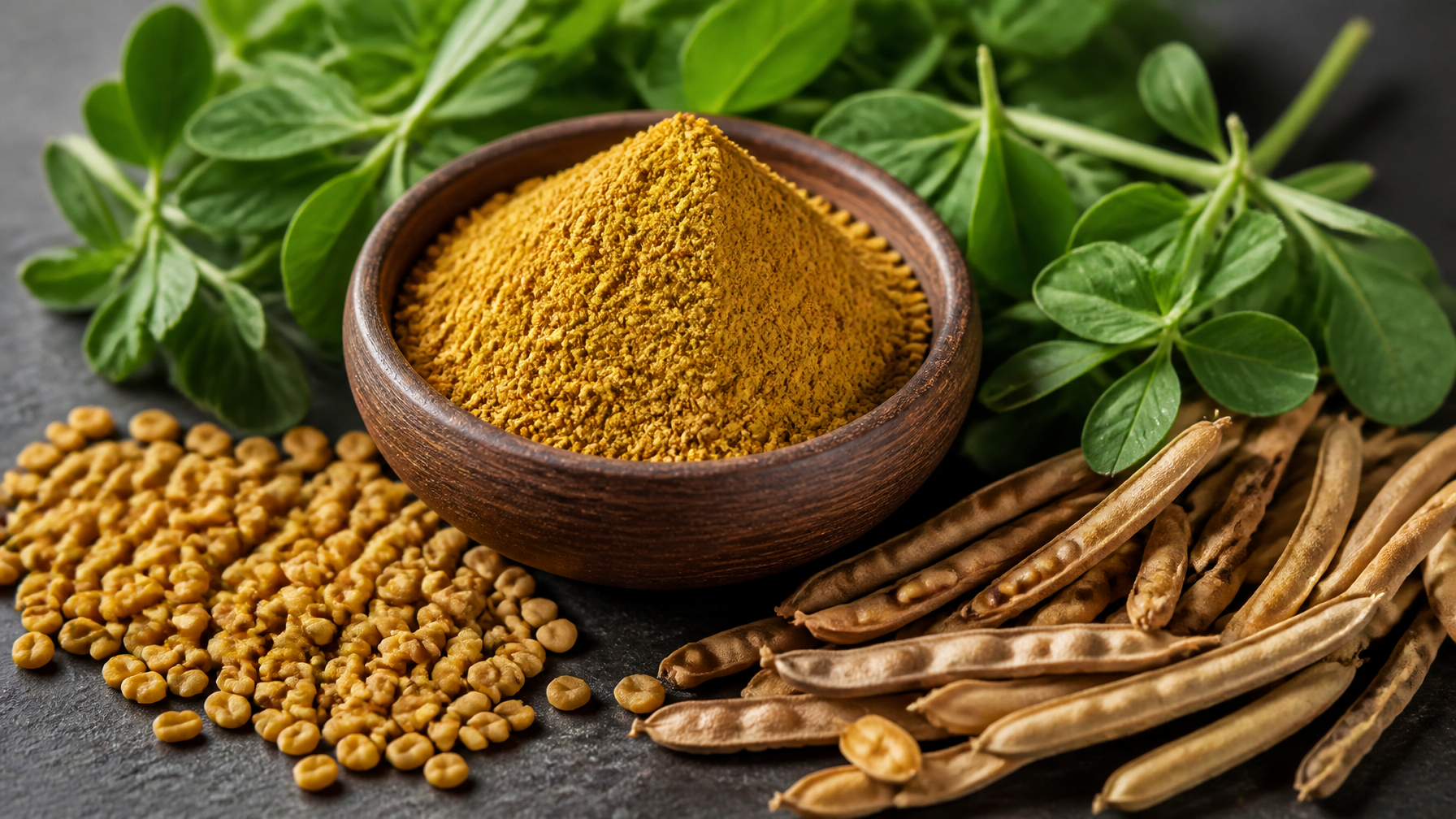
Fenugreek is one of the most frequently included ingredients in commercial testosterone boosters, which makes it one of the most frequently cited and one of the most frequently misrepresented. It appears on ingredient labels across dozens of products, often with bold claims attached. The actual research behind it is more nuanced than either the marketing suggests or the skeptics allow.
Fenugreek — Trigonella foenum-graecum — is a plant with a long history in culinary and traditional medicine use across South Asia, North Africa, and the Mediterranean. Its seeds contain several bioactive compounds relevant to hormonal health, most notably steroidal saponins called furostanolic saponins, as well as fiber, protein, and various micronutrients. It’s the saponin fraction that has attracted most of the research attention in the context of testosterone.
This article examines the proposed mechanisms behind fenugreek’s effects on testosterone, reviews the clinical evidence carefully, addresses the specific question of which hormonal pathways it affects, and provides practical guidance on dosing and product selection for men considering it as a standalone supplement.
How Fenugreek Is Thought to Influence Testosterone
Fenugreek’s proposed mechanisms for supporting testosterone differ meaningfully from those of ashwagandha and Tongkat Ali, which is worth understanding before looking at what the research shows. The distinction shapes which men are most likely to benefit and what kind of hormonal effect to expect.
Inhibition of Testosterone-Converting Enzymes
The primary proposed mechanism for fenugreek’s effects on testosterone involves the inhibition of two enzymes: aromatase and 5-alpha reductase. Aromatase converts testosterone into estradiol (estrogen), and 5-alpha reductase converts testosterone into dihydrotestosterone (DHT). Both conversions reduce the amount of testosterone remaining in circulation.
By inhibiting these enzymes — a process sometimes called aromatase inhibition and 5-alpha reductase inhibition respectively — fenugreek’s saponins may slow the rate at which testosterone is converted into other hormones, allowing more of it to remain as testosterone. This is a different mechanism from increasing testosterone production: it’s about preserving existing testosterone rather than stimulating more to be made.
The practical implication is that fenugreek’s benefit may be most pronounced in men whose testosterone is being rapidly converted — men with higher aromatase activity, which is often associated with excess visceral fat, as discussed in How Testosterone Affects Body Composition and Weight. Men with normal aromatase activity may see less effect through this pathway.
Effects on Free Testosterone Through SHBG
Some research has suggested that fenugreek may also affect sex hormone-binding globulin (SHBG) levels, with a reduction in SHBG potentially increasing the free testosterone fraction. The evidence for this mechanism is less consistent than for the enzyme inhibition pathway, and the direction of the effect varies across studies. It warrants mention as a proposed mechanism but should not be treated as an established finding at this stage.
Insulin Sensitization and Indirect Hormonal Effects
Fenugreek has well-documented effects on blood glucose regulation and insulin sensitivity, driven largely by its high fiber content and specific amino acids including 4-hydroxyisoleucine. This is relevant to testosterone because insulin sensitivity and testosterone are linked — insulin resistance is associated with lower testosterone levels and increased SHBG, while improved insulin sensitivity is associated with more favorable hormonal conditions.
Whether fenugreek’s insulin-sensitizing effects are large enough in practice to produce meaningful indirect effects on testosterone is unclear from the available research. But the pathway is biologically plausible and adds a layer to the ingredient’s potential relevance for men with metabolic factors contributing to their hormonal picture.
What the Clinical Research Actually Shows
The fenugreek research base includes a number of clinical trials, though the quality and design of these studies varies considerably. Several have used proprietary fenugreek extracts — particularly Testofen, a standardized extract from Gencor — which provides at least some basis for comparing results across studies that used the same material.
The Testofen Studies
Testofen is a fenugreek seed extract standardized to 50 percent fenuside, a specific saponin fraction. It has been the subject of several randomized controlled trials examining effects on testosterone and testosterone-related outcomes in men.
A frequently cited Australian study examined 60 healthy men aged 25 to 52 over six weeks of Testofen supplementation at 600 mg daily. The study found significant improvements in self-reported measures of sexual function, morning erections, and overall quality of life compared to placebo. Interestingly, total testosterone did not increase significantly — but free testosterone, measured as the ratio of free to total testosterone, did improve. This pattern is consistent with the enzyme inhibition mechanism: less testosterone being converted means a higher proportion remains in the free fraction, even if total production doesn’t increase.
A later study using a similar design found that Testofen supplementation maintained free testosterone levels in men aged 43 to 70 over 12 weeks, compared to a decline in the placebo group. This maintenance effect — preventing the decline rather than reversing it — is a clinically meaningful finding for older men, even if it’s less dramatic than an outright increase.
Studies in Resistance-Trained Men
Several studies have examined fenugreek in men who are exercising regularly, looking at effects on body composition, strength, and hormonal markers. These have produced mixed results. Some have found improvements in body fat percentage and lean mass alongside modest hormonal changes; others have found no significant difference from placebo on hormonal measures. The exercise context adds variables that make hormonal effects harder to isolate, and the populations studied — typically younger men with normal baseline testosterone — may not be the population where fenugreek’s effects are most pronounced.
What the Research Does Not Establish
The fenugreek research has notable gaps. Most studies are short, typically six to twelve weeks, with no long-term data. The most consistent findings involve free testosterone and testosterone-related outcomes like sexual function rather than clear increases in total testosterone production. Studies using whole fenugreek seed powder rather than standardized extracts have produced less consistent results, suggesting that the active compound concentration matters considerably. And several studies have been funded by the manufacturers of the extracts being tested — a common situation in the supplement industry that warrants appropriate caution in interpreting the findings, even when the study designs themselves are otherwise sound.
The Free Testosterone Finding: What It Actually Means
The most consistent finding across fenugreek studies is an effect on free testosterone rather than total testosterone — and this distinction deserves more attention than it typically receives in discussions of this ingredient.
An increase in free testosterone without a corresponding increase in total testosterone suggests that fenugreek is affecting how existing testosterone is partitioned rather than how much is being produced. If the enzyme inhibition mechanism is correct, testosterone that would otherwise have been converted to estradiol or DHT remains as testosterone — shifting the balance without increasing total production. This is a meaningful effect for men whose testosterone is being rapidly converted, but it’s a different kind of benefit from what most men imagine when they think about “boosting” testosterone.
It also has implications for men with already adequate free testosterone levels: if there’s less room for the free fraction to increase relative to the total, the measurable effect of fenugreek may be proportionally smaller. Men with high SHBG and low free testosterone despite normal total testosterone — a scenario covered in Can You Have Low Testosterone Symptoms With Normal Lab Results? — may be among those for whom this mechanism is most relevant.
Dosage: What the Studies Used
The most commonly studied dose in clinical trials is 500 to 600 mg of standardized fenugreek seed extract daily, typically taken in a single dose or split into two servings. Studies using Testofen specifically have primarily used 600 mg daily. Studies using lower doses or unstandardized fenugreek seed powder have produced less consistent results.
As with other natural ingredients in this category, many multi-ingredient testosterone boosters include fenugreek at doses below what the clinical research used. A product listing fenugreek at 150 or 200 mg is providing less than a third of the dose used in the studies that produced positive results. For men for whom fenugreek is a primary interest, standalone supplementation at 500 to 600 mg of a standardized extract provides better alignment with the research evidence than most multi-ingredient formulas.
Using Fenugreek as a Standalone Ingredient
Fenugreek seed powder has a distinctive flavor — often described as slightly bitter and reminiscent of maple syrup, due to the compound sotolone. It blends reasonably well into smoothies and is more palatable than Tongkat Ali in that format. The flavor is pronounced enough that most men will notice it in mild-tasting drinks.
For men supplementing in powder form, fenugreek seed extract is available from bulk ingredient suppliers including BulkSupplements.com. When purchasing, looking for a product that specifies its saponin content — ideally 50 percent or higher fenuside or similar saponin standardization — provides better alignment with the research evidence than generic fenugreek seed powder without standardization information.
Fenugreek is generally well-tolerated. Gastrointestinal effects — including bloating, loose stools, or digestive discomfort — are the most commonly reported side effects, particularly at higher doses or when taken on an empty stomach. Taking fenugreek with meals significantly reduces the likelihood of digestive issues. The maple-like body odor that some men notice when consuming fenugreek regularly is a known and harmless effect of its sotolone content.
Because fenugreek affects 5-alpha reductase — the enzyme that converts testosterone to DHT — men who rely on DHT-dependent functions should be aware of this mechanism. DHT plays important roles in several aspects of male physiology, and long-term suppression of 5-alpha reductase at high doses is a consideration worth factoring in, though the doses used in supplement studies are considerably lower than those used in pharmaceutical 5-alpha reductase inhibitors prescribed for prostate conditions.
Fenugreek in the Context of the Natural Ingredients Category
Fenugreek occupies a distinct position in the landscape of natural testosterone-supporting ingredients. Where ashwagandha works primarily through cortisol reduction and Tongkat Ali through SHBG modulation and potential LH support, fenugreek works primarily through enzyme inhibition — slowing the conversion of testosterone to other hormones rather than producing more of it or making more of it available from existing bound stores.
These mechanisms are complementary in principle, which is why fenugreek appears alongside ashwagandha and Tongkat Ali in many well-formulated multi-ingredient products. But complementary mechanisms only translate into complementary benefits if each ingredient is present at an effective dose — which, as noted throughout this category, is frequently not the case in commercial formulations.
For context on how fenugreek compares to and combines with other natural ingredients, the other articles in the Natural Ingredients category are worth reading alongside this one. And for men evaluating multi-ingredient products that include fenugreek, The Most Important Ingredients in Any Testosterone Booster and Proprietary Blends vs. Transparent Formulas: Why It Matters provide useful frameworks for assessing whether the dose included is meaningful.
Questions Men Ask About Fenugreek and Testosterone
Does Fenugreek Increase Testosterone?
The most consistent finding in fenugreek research is an increase in free testosterone rather than total testosterone — a distinction that matters. The proposed mechanism involves inhibiting enzymes that convert testosterone to other hormones, which preserves existing testosterone in its active form rather than stimulating more production. Total testosterone increases have been reported in some studies but are not a consistent finding across the research. The effect on free testosterone and testosterone-related outcomes like sexual function is more reliably documented.
How Does Fenugreek Differ From Ashwagandha and Tongkat Ali?
The three ingredients work through different primary mechanisms. Ashwagandha works primarily by reducing cortisol, creating more favorable conditions for testosterone production indirectly. Tongkat Ali works primarily through SHBG reduction, freeing more of the existing testosterone in circulation. Fenugreek works primarily through enzyme inhibition, slowing the conversion of testosterone to estradiol and DHT. These mechanisms are complementary rather than redundant, which is why the three frequently appear together in multi-ingredient formulas.
What Is Testofen and Why Does It Matter?
Testofen is a patented, standardized fenugreek seed extract from Gencor, standardized to 50 percent fenuside saponins. It has been used in several clinical trials examining fenugreek’s effects on testosterone and sexual function, giving it a more direct research pedigree than generic fenugreek seed powder. When evaluating fenugreek-containing products, the presence of Testofen — or a similar standardized extract with specified saponin content — provides greater confidence that the active compound profile aligns with what has been studied clinically.
How Long Does Fenugreek Take to Produce Effects?
Clinical studies have typically run six to twelve weeks and found significant effects within that window. Some improvements — particularly in subjective measures of sexual function and energy — have been reported within four to six weeks. For measurable changes in free testosterone, an eight-week minimum at an effective dose is a reasonable evaluation period. As with all natural ingredients in this category, consistency matters more than front-loading — irregular use is unlikely to produce the effects seen in daily supplementation studies.
Are There Any Safety Concerns With Fenugreek?
Fenugreek is generally considered safe at doses used in clinical research. Gastrointestinal side effects are the most commonly reported issue and are typically manageable by taking fenugreek with meals. The 5-alpha reductase inhibition mechanism warrants consideration for men who are monitoring DHT-dependent functions, though the doses in supplement studies are far below those of pharmaceutical 5-alpha reductase inhibitors. Fenugreek may lower blood glucose levels, which is relevant for men on diabetes medications — a physician should be informed if fenugreek is added to a regimen that includes glucose-lowering drugs.
Can I Take Fenugreek If I’m Already Taking a Multi-Ingredient Testosterone Booster?
It depends on what’s in the product and at what doses. If the multi-ingredient product already contains a meaningful dose of fenugreek — 500 mg or more of a standardized extract — adding standalone fenugreek on top would likely result in excessive intake without proportional benefit. If the product contains a sub-clinical dose of fenugreek as one of many ingredients, the two don’t obviously conflict, but the overall supplementation picture becomes more complex. Reviewing the full ingredient list of any multi-ingredient product and considering total daily intake of each ingredient is the right approach before stacking supplements.