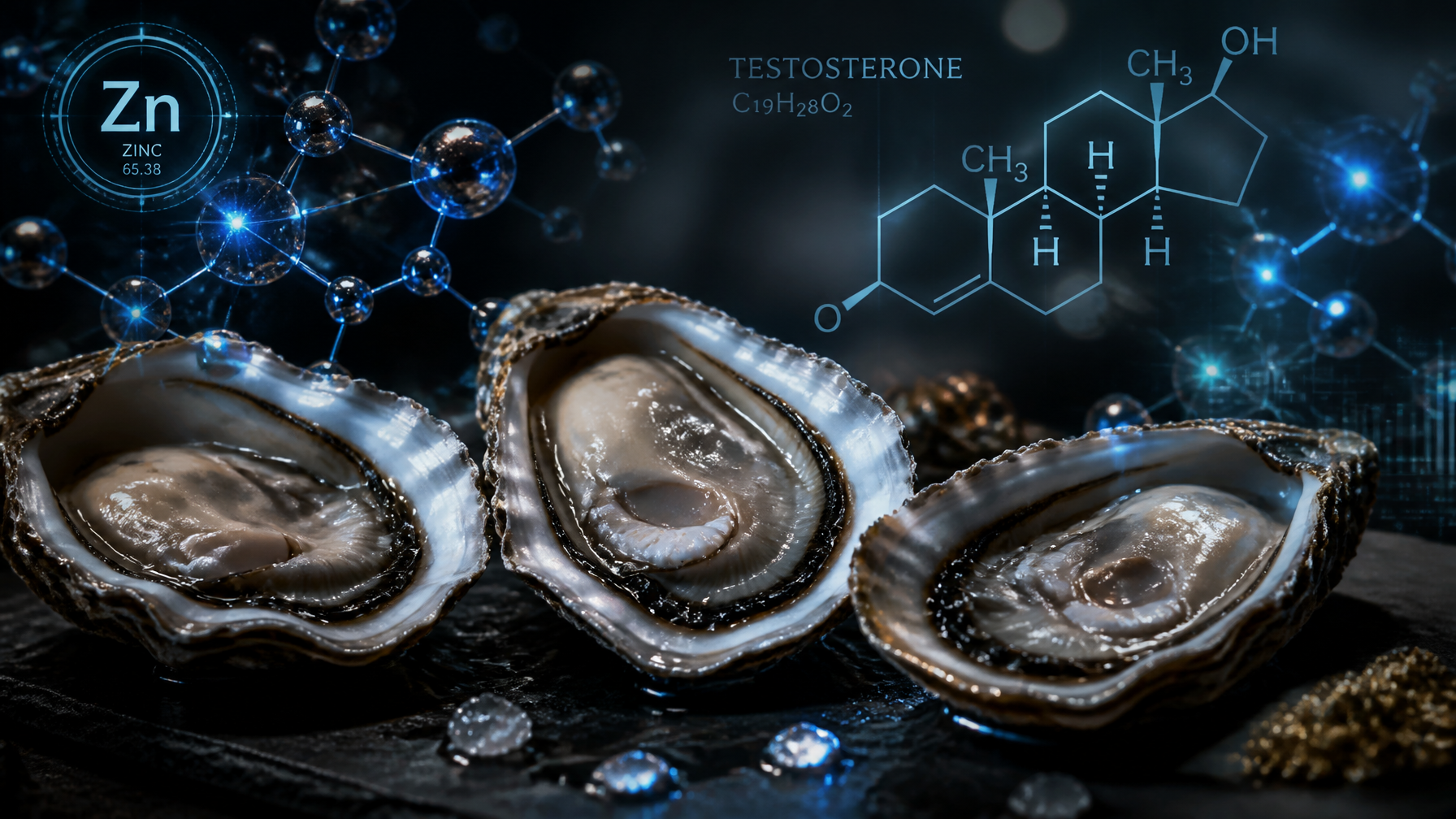
Zinc occupies a different position in the natural ingredients conversation than ashwagandha, Tongkat Ali, or fenugreek. Those are herbal ingredients with specific bioactive compounds that researchers have been working to understand in clinical contexts over recent decades. Zinc is an essential mineral — one the body cannot function without — and its relationship with testosterone isn’t a matter of emerging research so much as established physiology. The question isn’t whether zinc matters for testosterone. It does, demonstrably and mechanistically. The more useful questions are how much you need, whether you’re getting it, and what supplementation actually accomplishes.
Zinc is involved in more than 300 enzymatic reactions in the human body, and testosterone synthesis is among the processes that depend on it. It’s required for the function of the Leydig cells that produce testosterone, for the activity of enzymes involved in hormonal synthesis pathways, and for the regulation of several hormones that interact with testosterone. In a meaningful sense, adequate zinc isn’t a supplement strategy — it’s a nutritional foundation without which other testosterone-support approaches are working against a deficit.
This article covers zinc’s role in testosterone production, what deficiency looks like and how common it is, what the research shows about supplementation, how much is needed and in what form, and the important distinction between correcting a deficiency and supplementing beyond adequacy.
Zinc’s Role in Testosterone Production and Regulation
Zinc’s relationship with testosterone operates through several distinct pathways, each of which helps explain why even moderate deficiency can have measurable hormonal consequences.
Zinc and Testosterone Synthesis in the Testes
Testosterone production in the Leydig cells of the testes depends on a series of enzymatic steps that convert cholesterol into testosterone through intermediate hormones. Several of these enzymatic conversions require zinc as a cofactor — meaning zinc is structurally necessary for the enzymes to function. Without adequate zinc, these conversion steps slow or become less efficient, reducing the rate at which testosterone can be synthesized regardless of how much cholesterol substrate is available or how strong the LH signal from the pituitary is.
Zinc is also concentrated in the testes at higher levels than most other tissues — a distribution pattern that reflects its functional importance in testicular physiology rather than simple passive accumulation.
Zinc and the Hypothalamic-Pituitary-Gonadal Axis
Beyond its direct role in testicular testosterone synthesis, zinc influences the signaling chain that drives production. Research has found that zinc deficiency reduces the pituitary’s secretion of luteinizing hormone (LH) — the hormone that signals the testes to produce testosterone. This means zinc deficiency can suppress testosterone both at the production site and upstream in the regulatory chain, creating a compounding effect on hormonal output.
Some research has also found that zinc influences gonadotropin-releasing hormone (GnRH) secretion from the hypothalamus, which sits at the top of the hormonal cascade. The implication is that zinc adequacy is important at multiple levels of the system that regulates testosterone production — not just at the testicular level where the hormone is actually made.
Zinc as an Aromatase Inhibitor
Zinc has been identified as a natural inhibitor of aromatase — the enzyme that converts testosterone into estradiol. This mechanism is similar to the proposed mechanism for fenugreek, described in Fenugreek and Testosterone: What the Research Says, but zinc’s aromatase-inhibiting activity appears to be more broadly established in the research literature. By slowing the rate of testosterone-to-estrogen conversion, adequate zinc helps preserve the testosterone that is produced rather than allowing it to be diverted into the estrogen pathway.
This mechanism is particularly relevant for men with elevated aromatase activity — often associated with excess visceral fat — for whom the rate of conversion is a significant factor in their hormonal picture.
Zinc and SHBG
Some evidence suggests that zinc may also influence sex hormone-binding globulin levels, though this relationship is less consistently documented than the other mechanisms above. The direction of the proposed effect — lower SHBG with adequate zinc — would increase the free testosterone fraction, adding another potential pathway through which zinc status influences testosterone availability.
Zinc Deficiency: How Common and How Relevant
The importance of zinc’s role in testosterone production is most clearly demonstrated by what happens when zinc is deficient — and zinc deficiency, or at least zinc insufficiency, is more common than most people assume.
Prevalence of Zinc Insufficiency
True clinical zinc deficiency — severe enough to produce obvious symptoms — is relatively uncommon in developed countries. But zinc insufficiency — intake and status below optimal without crossing into frank deficiency — is considerably more prevalent. Estimates vary, but several analyses of dietary survey data suggest that a meaningful proportion of men in the United States and other Western countries have zinc intakes below recommended levels.
Several factors contribute to this. Zinc is most bioavailable from animal sources — red meat, oysters, and shellfish are the richest sources — and men who eat limited amounts of these foods are at higher risk of insufficiency. Vegetarian and vegan diets are particularly associated with lower zinc status because plant-based zinc sources have lower bioavailability due to phytate content. Alcohol consumption significantly impairs zinc absorption and increases urinary zinc excretion. Aging reduces zinc absorption efficiency. And intense physical activity — particularly endurance exercise — increases zinc losses through sweat.
What Zinc Deficiency Does to Testosterone
The research on zinc deficiency and testosterone is among the clearest in the natural ingredients category because the relationship is mechanistic and well-documented in both human and animal studies. A frequently cited study in the journal Nutrition found that men placed on a low-zinc diet for 20 weeks experienced significant reductions in testosterone levels, and that zinc supplementation in elderly men with marginal zinc deficiency produced significant increases in testosterone compared to placebo.
These findings establish an important principle: zinc supplementation raises testosterone in men who are deficient or insufficient, and the effect can be substantial. What they do not establish is that zinc supplementation raises testosterone in men who are already zinc-adequate — a distinction with significant practical implications, addressed below.
What the Clinical Research Shows
The zinc and testosterone research divides fairly cleanly along the line of baseline zinc status, and keeping that division in mind makes the evidence considerably easier to interpret.
Studies in Zinc-Deficient or Insufficient Men
Studies examining zinc supplementation in men with confirmed or likely zinc deficiency consistently find meaningful improvements in testosterone levels. The magnitude varies by study and population, but increases in total testosterone in the range of 50 to 100 percent or more have been reported in severely deficient men — though these extreme cases are not representative of the typical man reading a site about testosterone support.
More practically relevant are studies in populations with marginal zinc insufficiency — men whose intake is below optimal but not severely deficient. These studies generally find more modest but still meaningful testosterone improvements with supplementation, in the range of 10 to 30 percent depending on baseline status and duration of supplementation.
Studies in Zinc-Adequate Men
The picture changes considerably when zinc status is already adequate. Studies examining zinc supplementation in men with normal zinc levels have generally found minimal or no effect on testosterone. This pattern — meaningful effects in deficiency, negligible effects in adequacy — is consistent with zinc’s role as a nutritional foundation rather than a pharmacological testosterone stimulant. Filling a gap produces results; exceeding adequacy does not.
This is an important nuance that gets lost in the typical testosterone supplement marketing context, where zinc is listed as a key ingredient with implied universal benefit. The benefit is real, but it’s conditional on your zinc status. The first step for any man considering zinc supplementation for testosterone support is assessing whether zinc insufficiency is actually a plausible factor in his situation.
Zinc and Exercise-Induced Testosterone
A particularly relevant body of research examines zinc’s role in physically active men, where sweat losses make zinc depletion more likely. Several studies have found that zinc supplementation in athletes and regular exercisers — populations at higher risk of zinc depletion through sweat — supports testosterone levels and reduces the cortisol-to-testosterone ratio that can become unfavorable with heavy training loads. For men who exercise regularly and intensely, maintaining adequate zinc status is particularly important and arguably warrants more attention than more exotic supplement ingredients.
How Much Zinc Do You Need and in What Form
Zinc requirements and the practical question of supplementation dose are areas where the research provides fairly clear guidance, though the form of zinc matters alongside the amount.
Recommended Intakes and Supplementation Doses
The recommended dietary allowance (RDA) for zinc in adult men is 11 mg per day. This represents the intake needed to meet the requirements of most healthy adult men — it’s not an optimal target for hormonal health specifically but rather a general adequacy threshold. Some research in the context of testosterone and male reproductive health suggests that intakes somewhat above the RDA may be beneficial for men with higher needs — active men, older men with reduced absorption efficiency, or those with dietary patterns that reduce zinc bioavailability.
Supplementation doses in clinical studies have ranged widely — from around 25 mg to 45 mg of elemental zinc daily — but it’s important to note that the upper tolerable intake level for zinc is 40 mg per day for adults. Doses above this threshold, taken regularly over time, can interfere with copper absorption (zinc and copper compete for the same absorption pathways), potentially leading to copper deficiency with its own set of health consequences. Long-term supplementation above 40 mg daily without medical supervision is not advisable.
For most men supplementing zinc for general hormonal support, doses in the range of 15 to 30 mg of elemental zinc per day represent a reasonable and well-tolerated range. Men with confirmed deficiency may benefit from short-term higher doses under physician guidance.
Zinc Forms and Bioavailability
Not all zinc supplements deliver the same amount of usable zinc. The form of zinc — the compound it’s bound to — affects both elemental zinc content and absorption efficiency.
Zinc picolinate and zinc bisglycinate (also called zinc glycinate) are among the best-absorbed forms, with research showing higher bioavailability than the oxide form. Zinc citrate and zinc acetate also show good absorption. Zinc oxide — the most common and cheapest form found in many supplements and multivitamins — has the lowest bioavailability and the highest risk of gastrointestinal side effects, though it is not without effect at sufficient doses.
When selecting a zinc supplement, looking at the elemental zinc content — not just the total compound weight — and the form used provides more useful information than price or brand name. A supplement listing “zinc oxide 50 mg” delivers meaningfully less usable zinc than one listing “zinc picolinate 25 mg,” despite the higher milligram count on the label.
Dietary Sources and the Food-First Principle
For men whose zinc insufficiency stems from diet rather than absorption issues, food sources are worth addressing alongside supplementation. Oysters are by far the richest dietary source of zinc — a single serving provides several times the daily requirement. Red meat, particularly beef and lamb, provides well-absorbed zinc in substantial quantities. Shellfish, poultry, legumes, nuts, and seeds also contribute, though plant-based sources have lower bioavailability due to phytate content that binds zinc and reduces its absorption.
Men who eat red meat regularly and don’t have obvious absorption issues or high zinc losses through sweat may find their zinc status is already adequate, in which case supplementation is unlikely to produce meaningful testosterone benefits. Men with limited red meat and shellfish intake, those who exercise heavily, those who drink alcohol regularly, and older men with reduced absorption efficiency are the populations where zinc supplementation is most likely to matter.
Using Zinc as a Standalone Supplement
For men supplementing in powder form, zinc is available in various forms from bulk ingredient suppliers. Zinc picolinate and zinc bisglycinate powders are available through BulkSupplements.com and similar suppliers, providing cost-effective options for men who want to incorporate zinc into a daily smoothie or drink without capsules. The elemental zinc content of the dose depends on the specific form — zinc picolinate, for example, is approximately 20 percent elemental zinc by weight, meaning 100 mg of zinc picolinate delivers approximately 20 mg of elemental zinc.
Zinc is best taken with food to reduce the nausea that some men experience when taking it on an empty stomach. Avoid taking zinc alongside calcium supplements or high-calcium foods, as calcium competes with zinc for absorption. Similarly, if you take a copper supplement or a multivitamin containing copper, the zinc-to-copper ratio in your total daily intake is worth monitoring — a ratio of approximately 8:1 to 15:1 zinc to copper is generally considered appropriate.
The Practical Bottom Line on Zinc and Testosterone
Zinc’s role in testosterone production is well-established, mechanistically clear, and clinically meaningful — but the benefit of supplementation is conditional on actual zinc status. For men who are zinc insufficient, correcting that insufficiency can produce genuine and meaningful improvements in testosterone. For men who are already zinc-adequate, adding more zinc is unlikely to move the hormonal needle in any significant direction.
The most honest framing of zinc’s role in a testosterone support strategy is this: it’s a nutritional prerequisite rather than a performance ingredient. Getting zinc right doesn’t necessarily boost testosterone beyond your natural potential, but getting it wrong — or failing to notice that it’s been wrong for years — removes a foundational requirement for testosterone production that no other supplement can compensate for.
For context on how zinc fits alongside other micronutrients relevant to testosterone, the next article in this category — Magnesium and Testosterone: What the Research Says — covers an essential mineral with its own well-documented relationship with hormonal health. And for men looking at multi-ingredient testosterone boosters, The Most Important Ingredients in Any Testosterone Booster addresses how zinc fits into the broader formulation picture.
Questions Men Ask About Zinc and Testosterone
Will Taking Zinc Increase My Testosterone?
It depends on your current zinc status. If you are zinc deficient or insufficient — which is more common than many men realize, particularly those with limited red meat and shellfish intake, those who exercise heavily, or those who drink alcohol regularly — correcting that deficiency through supplementation can produce meaningful increases in testosterone. If you are already zinc-adequate, supplementation is unlikely to produce significant hormonal benefit. The first question to ask isn’t how much zinc to take, but whether zinc insufficiency is actually a plausible factor in your situation.
How Much Zinc Should I Take for Testosterone Support?
For most men, doses in the range of 15 to 30 mg of elemental zinc per day represent a reasonable and well-tolerated supplementation range. The upper tolerable intake level is 40 mg per day — doses above this taken regularly can interfere with copper absorption and potentially cause copper deficiency over time. The form matters as well: zinc picolinate and zinc bisglycinate are better absorbed than zinc oxide, meaning a lower milligram dose of a well-absorbed form may deliver more usable zinc than a higher dose of a poorly absorbed one.
What Are the Best Food Sources of Zinc?
Oysters are by far the richest dietary source — a single serving provides several times the daily requirement. Red meat, particularly beef and lamb, provides well-absorbed zinc in meaningful quantities. Shellfish, poultry, legumes, nuts, and seeds also contribute. Plant-based zinc sources have lower bioavailability due to phytate content, which is why vegetarian and vegan men are at higher risk of zinc insufficiency despite consuming zinc-containing foods.
Can I Get Enough Zinc From a Multivitamin?
Many multivitamins contain zinc, but in amounts that vary widely and in forms that may not be well absorbed. A multivitamin containing 8 to 11 mg of zinc as zinc oxide provides some zinc but may not be sufficient for men with higher needs or reduced absorption. Checking the form and elemental zinc content of your multivitamin is worthwhile. If the form is zinc oxide and the amount is at the lower end of the range, a separate zinc supplement in a more bioavailable form may provide better hormonal support.
Is There a Risk of Taking Too Much Zinc?
Yes. The upper tolerable intake level for zinc is 40 mg per day for adults. Chronically exceeding this level — particularly from supplements, since dietary zinc alone rarely reaches this threshold — can suppress copper absorption, leading to copper deficiency over time. Symptoms of zinc-induced copper deficiency include anemia, neurological symptoms, and immune dysfunction. Long-term supplementation above 40 mg daily should be done under medical supervision with attention to copper status.
Does Zinc Work Better With Other Ingredients?
Zinc works through mechanisms that are distinct from those of herbal testosterone-supporting ingredients like ashwagandha, Tongkat Ali, and fenugreek. As a nutritional foundation rather than a pharmacological ingredient, it doesn’t interact synergistically with those ingredients in the way that two complementary herbs might. What it does is ensure that the hormonal production machinery has the raw materials it needs to function — a prerequisite that makes other testosterone-supporting strategies more likely to be effective. Magnesium, covered in the next article in this category, operates similarly as an essential mineral with its own role in the hormonal production pathway.