
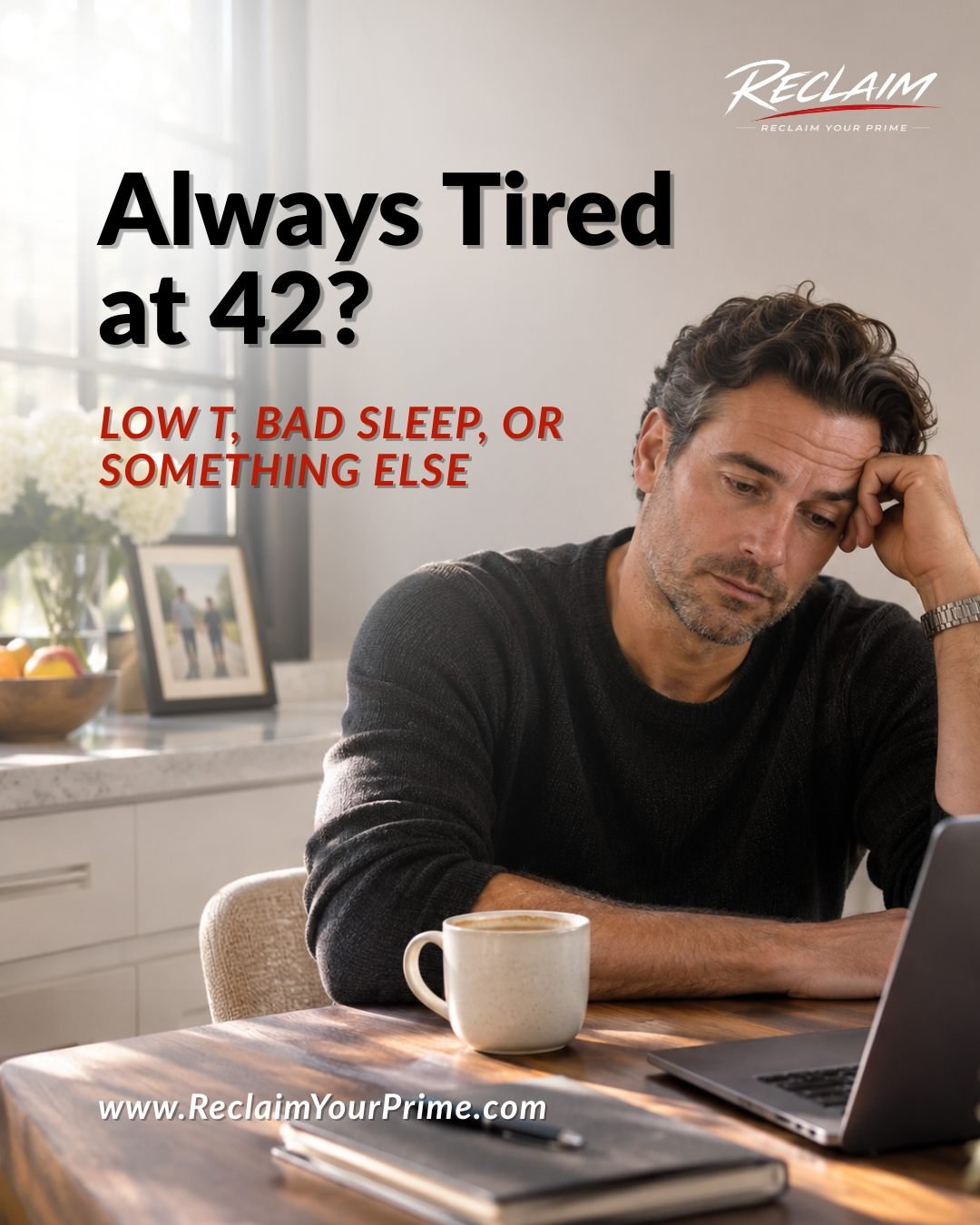
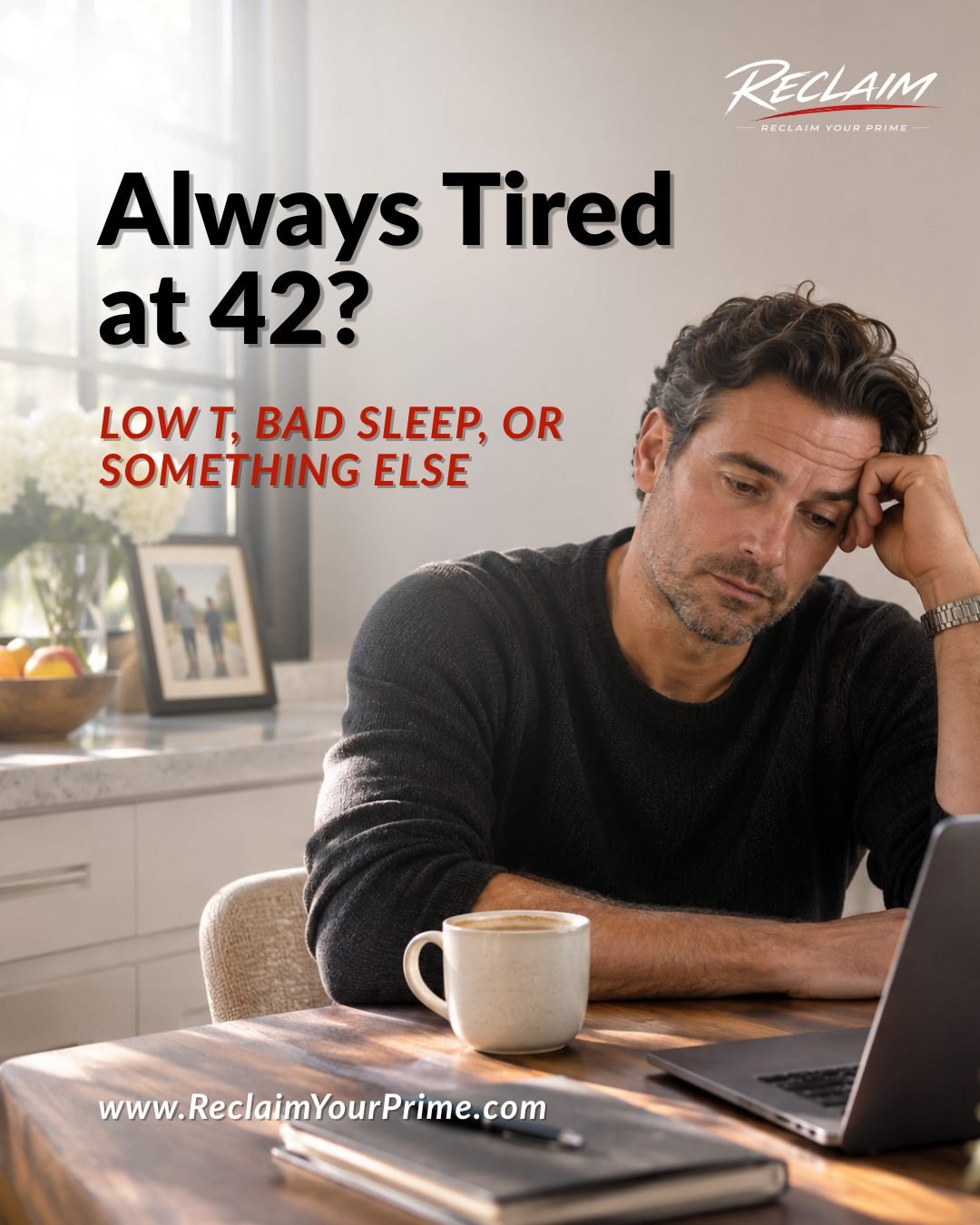
You’re up early. You work all day. You’re driving kids to practice. By 2pm you’re running on fumes, coffee helps less than it used to, and weekends don’t fix it.
You may have heard that low testosterone could be the answer. Sometimes it is. Often it’s something else, or a few things at once. Here’s how a physician thinks it through.
The usual suspects
Fatigue in men in their 30s, 40s, and 50s usually comes from one or more of these:
- Sleep. Not just how many hours, but how good they are. Loud snoring, waking up gasping, or waking up unrefreshed can point to sleep apnea, which is common, often missed, and very treatable.
- Stress and mood. Long-running stress, anxiety, and depression often show up as exhaustion rather than sadness.
- Alcohol. Even a couple of drinks in the evening can wreck the quality of your sleep.
- Weight and blood sugar. Extra weight around the middle and early changes in blood sugar can leave you drained, especially after meals.
- Thyroid. An underactive thyroid can cause tiredness, weight gain, and feeling cold.
- Iron and vitamins. Anemia, low B12, or low vitamin D can all play a part.
- Medications. Some blood pressure, allergy, sleep, and mood medications cause tiredness.
- Low testosterone.
Signs that point toward low T
Low testosterone usually comes with a cluster of symptoms, not tiredness alone:
- Lower sex drive
- Weaker or less frequent erections
- Losing muscle or strength even though you’re still training
- More fat around the middle
- Low motivation, irritability, or brain fog
If several of these sound familiar, testing makes sense. If tiredness is your only symptom, it’s worth looking more widely first.
How it’s checked
Testosterone is measured with a blood test, ideally in the morning, when levels are naturally highest. One low result isn’t enough to diagnose it. It’s usually confirmed with a second test. Your physician will typically check related labs too, which helps explain why your level is low and whether treatment is safe for you. Our hormone guide walks through what’s drawn and when.
If it is low T
There’s more than one option. Testosterone therapy is one. For men who want to protect their fertility, a medication like enclomiphene, which encourages your body to make more of its own testosterone, may be a better fit. The right choice depends on your labs, your age, whether you’re planning a family, and your overall health.
Testosterone therapy requires a live video visit with a physician, and it’s currently prescribed in 21 of the states we serve.
If it isn’t low T
That’s useful to know too. Treating sleep apnea, cutting back on alcohol, correcting a thyroid problem or anemia, or working on your weight can make a real difference, and none of those need hormones.
The bottom line
Feeling worn out all the time isn’t just part of getting older. It’s a symptom, and symptoms have causes. Start with the basics, get the right labs, and make decisions with a physician who looks at the whole picture.
See a doctor in person promptly if your tiredness comes with chest pain, shortness of breath, unexplained weight loss, or fevers or night sweats.
Want to find out?
Learn about hormone optimization
This article is for general education and is not medical advice. Prescription treatments are available only after evaluation by a licensed physician, and are not appropriate for everyone.
Certain treatments referenced on this site are compounded preparations or are prescribed for uses other than those approved by the FDA. Compounded medications are not FDA-approved and are not reviewed by the FDA for safety, effectiveness, or manufacturing quality. Your physician will review this with you before prescribing.